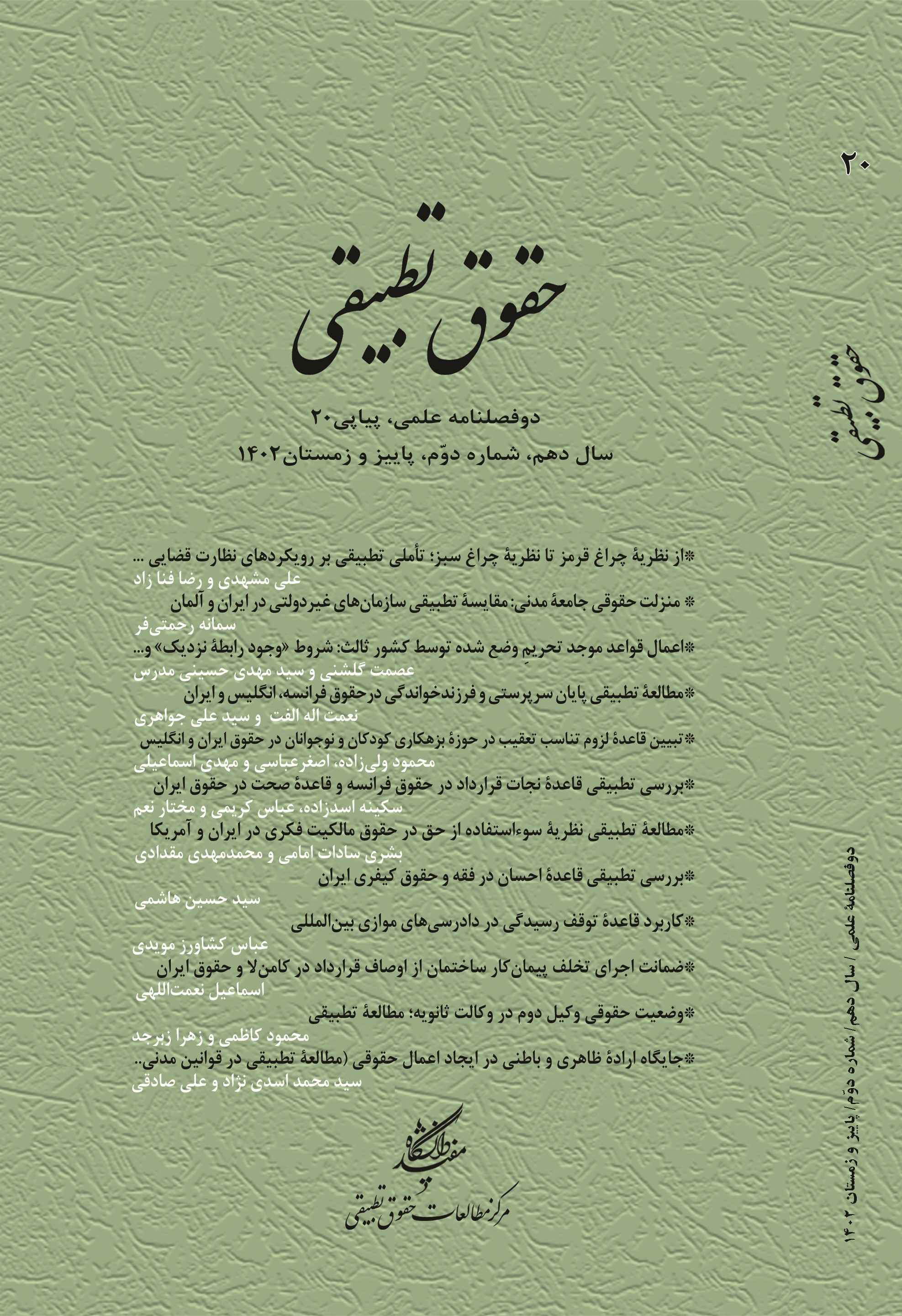
دوفصلنامۀ علمی حقوق تطبیقی

دوفصلنامۀ علمی حقوق تطبیقی

مطالعه تطبیقی نظریه سوءاستفاده از حق در حقوق مالکیت فکری در ایران و آمریکا

نوع مقاله : مقاله پژوهشی

نویسندگان
1 دانشجوی دکترای حقوق خصوصی، دپارتمان حقوق، دانشگاه مفید، قم، ایران.
2 دانشیار، دپارتمان حقوق، دانشگاه مفید، قم، ایران.
چکیده
حقوق مالکیت فکری به وجود آمده‌است تا از حقوق آفرینندۀ اثر فکری، حمایت حداکثری و انحصاری کند. بنابراین دارندۀ این حقوق، عملاً نسبت‌به سایرین در مزیت و برتری قرار می‌گیرد. این امر یکی از ادلۀ اصلی مخالفان اعطای حقوق انحصاری به صاحبان آثار فکری است، چراکه انحصار می‌تواند زمینه‌ساز سوءاستفاده باشد. بنابراین برتریِ یادشده تا آنجا که فقط صیانت از حقوق دارنده مطرح باشد مطلوب خواهد بود، اما برای جلوگیری از سوءاستفادۀ دارنده از حقوق خویش در برابر خریدار یا مصرف‌کنندۀ مال فکری، بایستی موضع مشخص نظری و ابزار مناسب عملی در دست داشت تا حقوقی که برای حمایت از آفرینندۀ اثر فکری ایجاد شده‌اند، خود دست‌آویز سوءاستفاده در برابر منافع عمومی قرار نگیرند. این پژوهش در نظر دارد مصادیق سوءاستفاده از حق را در حیطۀ اموال فکری بیابد و سپس کارکرد نظریۀ سوءاستفاده از حق را در این موارد استنباط کند. به این منظور، مواردی که دارندۀ حق فکری به پشتوانۀ قوانین، وضعیت مسلط و یا امکان سوءاستفاده از حقوق خویش را پیدا می‌کند، در دو دستۀ حقوق مالکیت ادبی و هنری و حقوق مالکیت صنعتی بررسی شده و در هر مورد، سیر به‌کارگیری نظریۀ سوءاستفاده از حق در نظام‌های غربی به‌ویژه حقوق آمریکا مرور شده‌است. درنهایت ضرورت و امکان پیاده‌سازی این نظریه در حقوق داخلی مطرح شده‌است.
کلیدواژه‌ها

موضوعات


عنوان مقاله English

Comparative Study of Abuse of Rights Doctrine in Intellectual Property in Iranian and American Law

نویسندگان English

Boshra Sadat Emami 1
Mohammad Mahdi Meghdadi 2
1 PhD Student in Private Law, Department of Law, Mofid University, Qom, Iran.
2 Associate Professor, Department of Law, Mofid University, Qom, Iran.
چکیده English

Intellectual Property Rights were born to provide maximum and exclusive protection of rights of the creator of intellectual work, but in practice the holder of these rights gains an advantage over others. This is one of the main arguments of the opponents of granting exclusive rights to IP owners, saying monopoly can lead to abuse. This superiority will be desirable as far as protection of the rights of the holder is concerned. But in order to prevent the holder from abusing his rights vis-a-vis the buyer or consumer of intellectual property, a clear theoretical position and appropriate practical tools must be in place so that the rights granted to protect the creator of the intellectual property are not abused against the public interest. This study intends to gather examples of abuse of rights in the field of intellectual property and then infer the function of the doctrine of abuse of rights in these cases. For this purpose, the cases in which the intellectual right holder finds himself in a dominant position or the possibility of abusing his rights based on laws, are examined in two categories of literary and artistic property rights and industrial property rights. Western legal systems, specifically American laws, have been reviewed, and the necessity and possibility of applying this theory to domestic law has been discussed.

کلیدواژه‌ها English

Intellectual property Rights
Abuse of Rights
La-Zarar Rule
Abuse of Rights Doctrine
Unclean Hands Doctrine
سیاهۀ منابع
الف- منابع فارسی:
حکمت‌نیا، محمود. مبانی مالکیت فکری، تهران: پژوهشگاه فرهنگ و اندیشۀ اسلامی، ]بی‌تا[.
صادقی، محمود، و منصور خاکپور. «موجبات اعطای مجوز اجباری بهره‌برداری از حقوق مالکیت فکری»، فصلنامۀ مدرس علوم انسانی 11، شماره 4 (1386): 131‑164.
کریمی، عباس، و هادی شعبانی کندسری. «رابطۀ منطقی قاعدۀ فقهی لاضرر و قاعدۀ غربی سوءاستفاده از حق»، فصلنامۀ پژوهش‌های تطبیقی حقوق اسلام و غرب 1، شماره 2 (1393): 166‑135.
معینی، حامد و سعیده قاسمی‌پور. «دکترین سوءاستفاده از حق در مالکیت ادبی و هنری»، فصلنامۀ حقوق پزشکی (ویژه‌نامۀ حقوق مالکیت فکری) 6 (1391): 187‑208.
میرحسینی، سید حسن. حقوق اختراعات، تهران: میزان، 1387.
 
ب- منابع لاتین:
Ahmad, Saleh. “Patents: Inventorship Vs Ownership.” Accessed November 21, 2020. https://www.tamimi.com/law-update-articles/patents-inventorship-vs-ownership.
Alcatel USA, Incorporated v. Dgi Technologies, Inc. 166 F.3d 772, 1999.
American Patent Act. 35 United States Code, https://uscode.house.gov/view.xhtml?req=granuleid:USC-prelim-title35-section154&num=0&edition=prelim
Assessment Technologies of WI, LLC v. WIREdata, Inc. 350 F.3d 640, 2003.
Atari Games Corp. v. Nintendo of America Inc. 975 F.2d 832, 1992.
Byers, Michael. “Abuse of Rights: An Old Principle, A New Age.” McGill Law Journal 47 (2002):  389-431.
Carl Zeiss Stiftung v. VEB Carl Zeiss, Jena, 293 F. Supp. 892, S.D.N.Y. 1968.
Edwin C. Hettinger, “Justifying Intellectual Property.” Philosophy and Public Affairs 18, no. 1  (1989): 25‑31.
Goldstrin, Paul. Goldstein On Copyright.  3rd edition, Boston: Aspen Publishers, 2005.
Japanese Law Translation. “Patent Act.” Accessd April 13, 2022. https://www.japaneselawtranslation.go.jp/en/laws/view/3118/en
Justia. “Lasercomb America, Inc. v. Reynolds (1990).” Accessed January 17, 2020. URL: https://law.justia.com/cases/federal/appellate-courts/F2/911/970/14376
Kobak, James B. Intellectual Property Misuse: Licensing and Litigation. Chicago: American Bar Association, 2000.
Lasercomb America, Inc. v. Reynolds, 911 F.2d 970. 1990.
Lunney, Glynn. “Atari Games v. Nintendo: Does a Closed System Violate the Antitrust Laws.” Berkeley Technology Law Journal 5, no.1 (1990): 29-73.
M. Witmark and Sons v. Jensen, 80 F. Supp. 843,1948.
Miller, Fredric P., Agnes F. Vandome, and John McBrewster. Anti-copyright: Anti-copyright, Copyright, Internet, Web 2.0, Information technology, Mashup (digital), Anarchist communism, Competition law, Artificial scarcity, Criticism of intellectual property. [N.P]: Alpha Press, 2009. https://dl.acm.org/citation.cfm?id=1823438.
Sterling, JAL. World Copyright Law. 2nd edition, London: Sweet & Maxwell. 2003.
Stoll, Peter-Tobias, Jan Busche, and Katrin Arend. WTO - Trade-Related Aspects of Intellectual Property Rights. Leiden: Max Planck, 2009.
The Department of Commerce. Copyright Policy, Creativity, and Innovation in the Digital Economy. [N.P]: Createspace Independent, 2014.
Tritton, Guy., and Richard Davis. Intellectual Property in Europe. 3rd edition, London: Sweet & Maxwell, 2007.
Video Pipeline, Inc. v. Buena Vista Home Entm’t, Inc., 342 F.3d 191, 3d Cir. 2003.
ارسال نظر در مورد این مقاله
نام را وارد کنید.
نشانی پست الکترونیکی را به درستی وارد کنید.
وابستگی سازمانی را به درستی وارد کنید.
توضیحات را وارد کنید (حداقل 50 حرف)
CAPTCHA Image
شناسه امنیتی را به درستی وارد کنید.