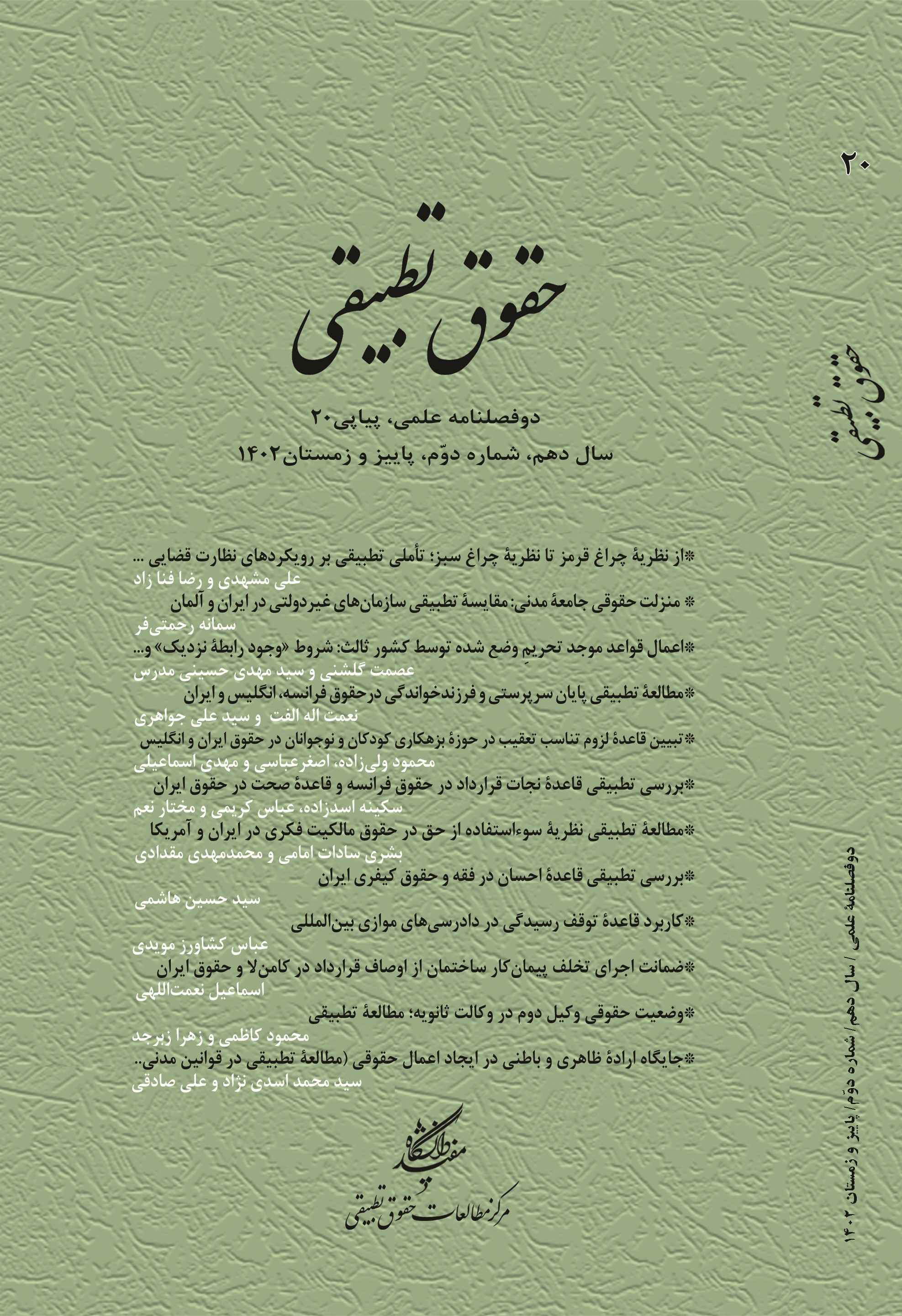
نوع مقاله : مقاله پژوهشی
عنوان مقاله English
نویسنده English
The rule of Ehsan (goodness) has a distinguished situation in Iran criminal law and especially has been considered in article 509 and 510 of Islamic penal code enacted in 2013. This rule is accepted by jurisprudents and based on jurisprudential arguments including Quran, narration, wisdom and the rational basis.
There are some difference of opinions among jurisprudents and lawyers of scope and circumstances of the rule. The main question is that whether the rule is related only to disposal of losses or includes obtaining benefits? In connection to circumstances of the rule, the main question is that whether the goodness act should be goodness in reality in addition to intention of goodness?
It seems that the act should be reasonable and without any recklessness as lead to obtaining benefits normally also it may lead to harm or losses accidentally, in addition to intention of goodness. In addition, the true opinion regarding to the rule is that the goodness act should be free and voluntary and the Iranian judicial precedent accepted this idea that the act should be free.
In addition, the most important aspects of the rule have been discussed in the present research such as situation of the rule in execution of verdicts and medical faults.
کلیدواژهها English